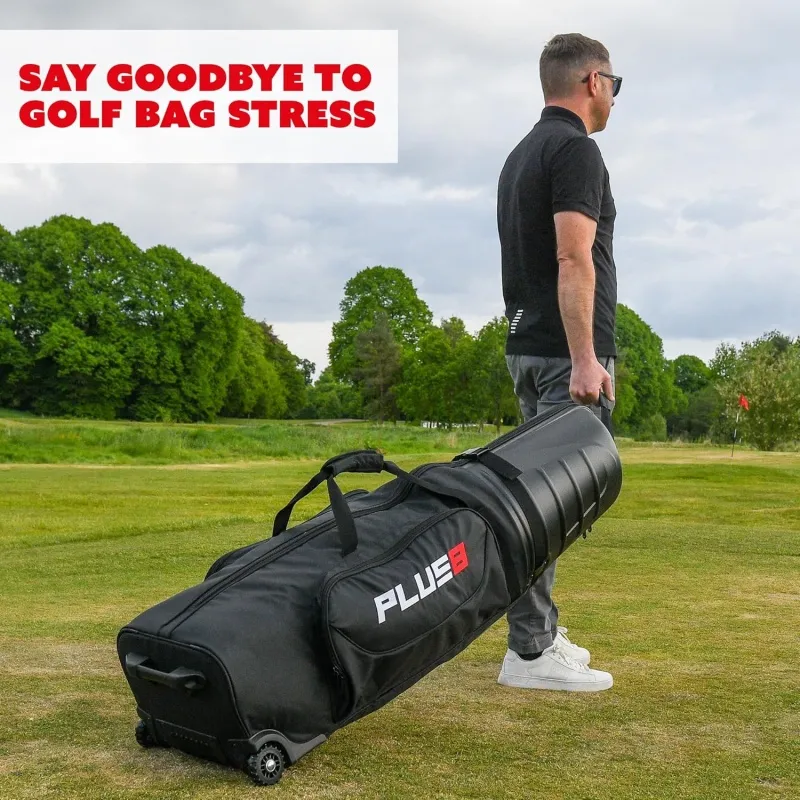


A good golf bag looks simple: a cylinder with pockets and a strap. Look closer, and it’s an ergonomic machine built to protect clubs, reduce fatigue, and adapt to how you move. This article digs into the technical principles that make modern golf bags work—from weight distribution and divider geometry to materials science and wheel mechanics. If you’ve ever wondered why some golf bags feel effortless while others are a pain, this is for you.
Why Design Matters More Than Brand Names
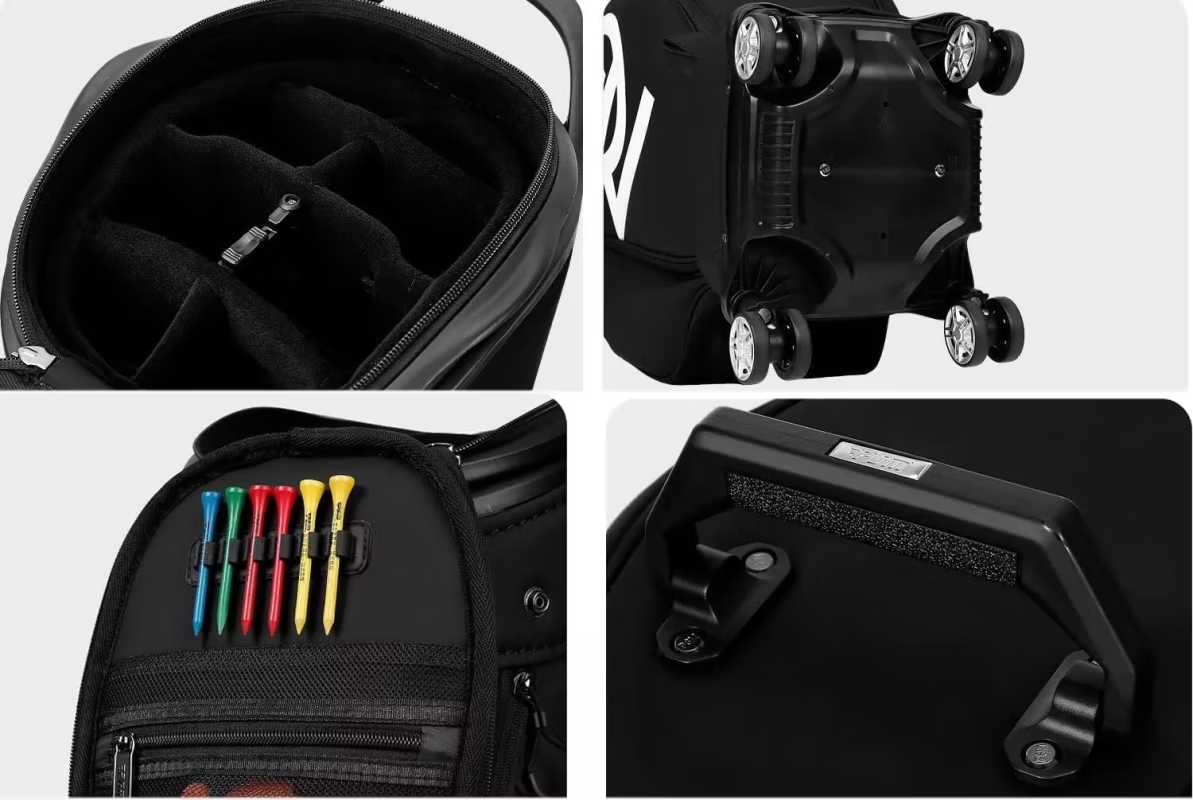
The performance of a golf bag is determined not by its brand identity, but by its design decisions. Engineers balance competing goals: protect your clubs during travel, keep the bag light for walkers, and offer enough pockets without adding girth. The result is a set of trade-offs. Understanding those trade-offs helps you pick the golf bags that solve your problems: the best compromise for your habits, whether you ride a cart, walk 18, or fly with clubs.
Load Path and Weight Distribution: The Invisible Math
At the heart of every ergonomic golf bag is the concept of the load path. Where does the weight of the bag and its contents travel when you lift it, sling it, or roll it?
- For shoulder-carried golf bags, designers place padding and straps so the load passes through strong torso muscles rather than small shoulder tendons. Dual-strap systems split the burden across both shoulders and the upper back, which is why lightweight walking bags feel so different from single-strap models.
- For cart-oriented golf bags, stability matters. The top rail and base must align with cart mounts so the bag’s center of gravity sits low and rearward. Proper alignment reduces tipping and prevents your clubs from bouncing—a small design choice that preserves club heads.
An example of practical engineering is the Upright Golf Bag’s combination of a rigid frame and multiple carrying methods. By offering both a rubber handle and padded shoulder strap, it controls load paths across various use cases.
Divider Geometry: Protecting Clubs, Minimizing Tangles
Dividers do the quiet work of keeping your irons, woods, and putter happy.
- A full-length 14-way divider isolates each club, minimizing collisions and protecting shafts during transport.
- Simpler 5-way or 4-way dividers prioritize accessibility and lighter weight.
The spacing, wall thickness, and lining material of the divider determine the degree of wear and tear on the clubs and their placement. Softer, well-lined dividers cut down noise and abrasion; stiffer dividers maintain spacing under heavy loads. Designers of top golf bags test divider layouts with full club sets to balance protection with speed of retrieval.
Stand Mechanisms and Stability Engineering
If you carry a stand bag, you’ve relied on a deceptively simple hinge. But stand mechanics involve timing, damping, and center-of-gravity control.
- The stand must deploy predictably and retract smoothly to avoid pinching or unexpected collapse.
- The tripod-style legs found on many walking golf bags are angled so ground contact points create a stable triangle, resisting sliding on slopes.
- Materials and joint lubrication affect lifespan—cheap metal or loose rivets lead to wobble.
A well-engineered bag deploys its stand in a way that naturally shifts the load toward the legs, keeping the top rail accessible without tipping the bag forward.
Wheels, Axles, and Rolling Dynamics
Wheeled bags introduce a new set of mechanical challenges: wheel alignment, axle stiffness, and bearing quality.
- Wheels should track true and resist lateral play. Otherwise, rolling becomes jerky and adds stress to the bag’s shell.
- Universal 360° wheels prioritize maneuverability in tight spaces like elevators and clubhouse corridors. Designers must balance that maneuverability with the need for straight-line stability on ramps and in parking lots.
- Quality bearings and sealed housings keep grit out—a small maintenance feature that vastly improves wheel lifespan.
Upright golf bags that combine 360° wheels with a solid chassis provide an easy, low-effort travel experience from car to tee.
Material Choices: Abrasion, Water Resistance, and Longevity

Materials define both feel and function.
- Nylon is lightweight, tear-resistant, and forgiving in wet conditions—often the go-to for walking and cart golf bags.
- Microfiber leather elevates aesthetics and resists scuffs; it’s heavier but communicates a premium look.
- Hard-shell components (ABS, reinforced plastics) protect clubs during airline travel by absorbing impact differently than fabric.
Manufacturers combine fabric with reinforced stitching and seam seals to prevent catastrophic consequences from damage to a single component.
Modular Design and Maintainability
Modern golf bags increasingly adopt modular thinking: removable straps, replaceable wheels, and serviceable zippers. This design philosophy improves longevity and sustainability because users can replace high-wear parts rather than discard the entire bag. From a technical standpoint, modularity reduces lifecycle cost and invites repairability.
Testing Protocols: How Designers Validate Performance
Engineers use simulated use cases and stress tests to validate designs: repeated drops, abrasion cycles, tensile strap tests, and wheel-rolling tens of thousands of meters. They also combine lab testing with user panels—real-world walking rounds, cart mounting trials, and airport transit runs. This mix of quantitative and qualitative testing ensures golf bags don’t just survive spec sheets; they perform in the messy real world.
How to Evaluate Engineering When Shopping
You don’t need an engineering degree to judge quality:
- Inspect how the strap anchors are stitched and riveted; reinforced stitching suggests longer life.
- Check stand deployment: does it lock smoothly or feel jerky?
- Roll the bag on a flat surface and listen; noisy wheels often mean cheap bearings.
- Open dividers and feel the lining; soft, dense lining implies better club protection.
When in doubt, prioritize features that solve your main use case: lightweight engineering for walking, a sturdy chassis for travel, or stable top rails for cart play.
Practical Recommendation
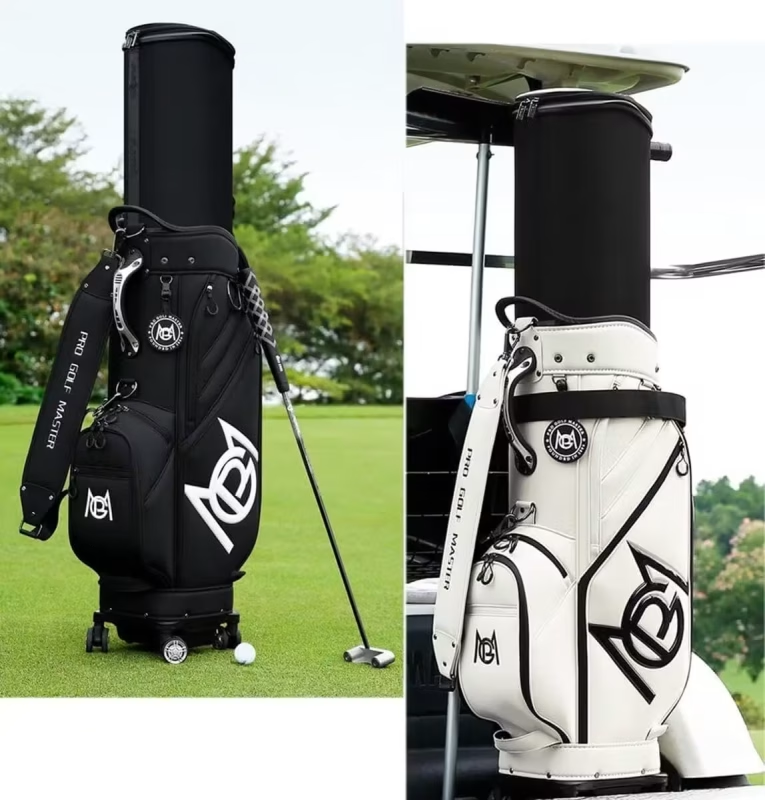
If you want a blend of engineered mobility and premium finish, consider an upright design built with a robust frame and 360° wheels. For example, the Upright Golf Bag pairs a high-end skin-feel microfiber leather exterior with a retractable, lockable stand and universal wheels—a package that reflects thoughtful engineering across materials, mobility, and club protection. It’s a smart choice for players who value organization and effortless movement between car, clubhouse, and tee.
Conclusion
Understanding the engineering behind golf bags gives you leverage as a buyer. Design choices around load paths, divider geometry, stand mechanics, and materials all affect daily comfort and long-term durability. Look beyond brand slogans: focus on how the bag solves real problems for your routine. The best golf bags are the ones that disappear into the background and let you play.
Shop engineered golf bags with thoughtful dividers, wheels, and premium protection today.