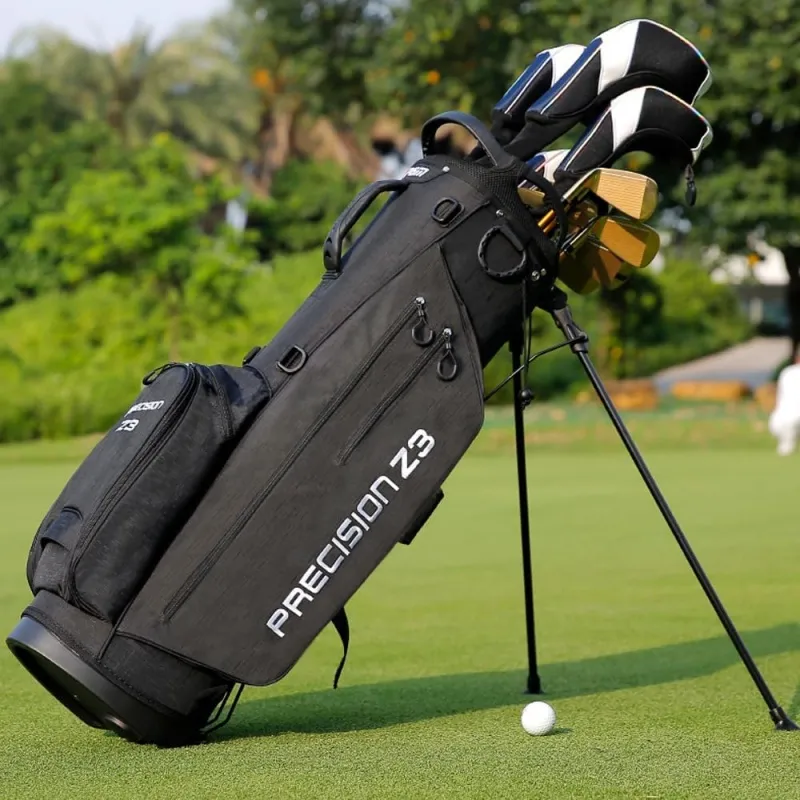

Step into any professional golf retailer, and you will notice a fascinating contrast. On one display stand are ultra-minimalist, brightly colored, lightweight golf bags. They appear almost fragile, promising to make you “forget they even exist.”
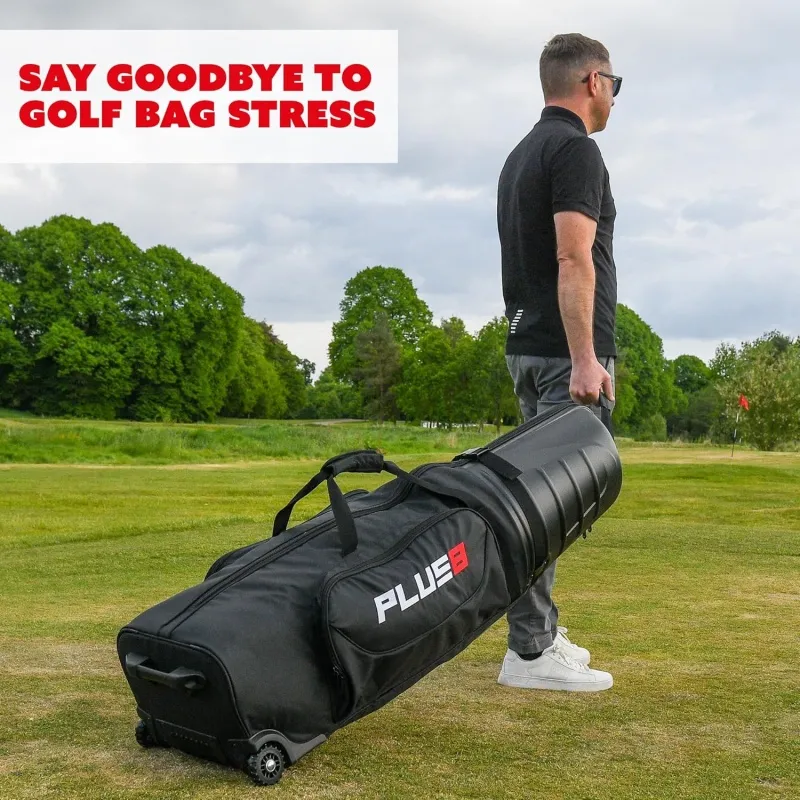
On the other side stand rigid, sharply contoured hard-shell travel golf bags, resembling mobile fortresses for equipment, radiating a sense of “steel armor”-like security.
This is not product-line confusion but rather the smartest and most precise evolution of today’s golf bag market: two radically different technological paths advancing in parallel, each addressing the deepest needs of its core users.
Today, we are not talking about vague “all-rounders.” Instead, we dive into the logic behind this divergence and explore how lightweight minimalism and protective armor together outline the future of golf equipment.
An Ode to Minimalism: The “Invisible” Partner That Lightens Every Step

The pursuit of ever-lower weight is far from a passing trend. It has grown alongside the revival of walking golf and modern players’ desire for health-focused, immersive sporting experiences.
For this group, the core mission of a golf bag has fundamentally changed: from a passive storage container to an active, zero-burden “invisible” companion.
At the heart of lightweight design lies the dance between materials science and structural engineering. This is far more than simply “using thinner fabric.” A truly lightweight golf bag reveals its mastery in three areas:
- High-performance fabrics: Abandoning heavy traditional materials in favor of high-strength lightweight nylon, delivering exceptional tear and abrasion resistance at minimal weight.
- Streamlined skeleton: A redesigned internal support system that removes all non-essential components, retaining only the core structure needed for shape and stand functionality. Every buckle and every seam is evaluated for weight reduction.
- Intelligent load distribution: Ergonomic dual-strap systems distribute already minimal weight evenly across the back and shoulders. Thick padding is not for bearing heavy loads but for rendering already negligible pressure virtually imperceptible.
Take, for example, a portable stand bag favored by walking golfers. Its success lies in extreme focus. With a self-weight of about 2 kilograms, the journey from garage to course feels as easy as carrying a briefcase.
Its stable tripod stand system solves upright positioning on varied terrain through elegant geometry alone, without any bulky base. When worn, the wide straps make the load almost disappear; when set down, it stands quietly and securely beside you.
Its purpose is singular: to interfere as little as possible with your dialogue with the course and the shot itself.
Target User Profile: Regulars at local courses, devoted walking golfers, purists who value physical sensation and immersive play, and anyone who believes that less interference leads to greater joy.
Armor for the Global Player: A “Mobile Safe” for Every Flight
In stark contrast to lightweight minimalism stands another powerful market demand: the desire for absolute protection.
As golf travel becomes routine, players increasingly entrust their beloved clubs to the unforgiving systems of air transport. Here, the mission of the golf bag changes once again: it must become a mobile safe capable of withstanding rough handling, harsh weather, and long-distance vibration.
The core of armored design lies in the ultimate fusion of protection level and travel convenience. And this is no longer about simply “making it thicker”:
- Exoskeleton revolution: Hard shells made from engineering plastics such as ABS composites. These materials absorb impact through controlled deformation, protecting contents rather than transferring force inward. They form the bag’s true “exoskeleton.”
- 360-degree cushioning: Internally, flexible padding layers and adjustable strap systems secure every club and accessory in place, eliminating movement and collision during transit.
- Integrated travel infrastructure: A premium hard-shell travel bag functions as a high-end suitcase, incorporating smooth 360-degree wheels, telescopic handles, TSA-approved locks, and intelligently partitioned interior storage.
Imagine preparing for a dream trip to Scotland or Pebble Beach. You load your equipment into an aviation-grade hard-shell travel case, zip it shut, and lock it down.
You know that the rigid shell and internal cushioning have formed the first line of defense for your clubs. When you hand it over for check-in, your mind is calm.
No matter how conveyor belts jolt or baggage carts stack, your investment and your companions are protected at the highest level.
This peace of mind is the core value that the armored trend ultimately sells.
Target User Profile: Frequent flying golfers, amateur competitors crossing states or borders, equipment enthusiasts who treat clubs as precision instruments, and anyone who believes that peace of mind is priceless.
The Trend Observatory: Answering Your Core Questions

At this point, you may be wondering: are these two paths destined never to meet? And how should one choose? Let’s explore the key questions.
Q: Will there ever be an “ultimate golf bag” that is both ultra-lightweight and offers hard-shell-level protection?
This is an enticing vision, but from today’s materials science and engineering perspective, it faces a fundamental challenge: the physical trade-off between mass and protective strength.
Top-tier protection requires material mass and structure. Extreme lightness demands aggressive material reduction. At a physical level, these goals inherently conflict.
More likely future directions include:
- Scenario-based modular systems: An ultra-light main bag paired with an optional, detachable lightweight hard-shell cover for travel use.
- Breakthrough materials: Advanced composites or non-Newtonian materials that remain soft during normal use and harden instantly upon impact, though currently confined to high-cost or military applications.
- Intelligent compromise designs: Reinforced hard materials in critical zones such as the club-head area and base, combined with ultra-light fabrics elsewhere, offering targeted protection without full hard-shell equivalence.
For most brands, clearly separating product lines into lightweight walking series and armored travel series, and perfecting each, is wiser than pursuing a compromised “do-it-all” solution.
Q: As a typical golfer, how should I choose wisely between these two trends?
The answer is surprisingly simple: conduct an honest “usage scenario audit.”
Ask yourself this core question: Over the next one to two years, where will over 90% of my golf activity take place?
If your scenario includes:
- Primarily local or nearby courses
- Enjoying walking golf or push carts
- Transporting the bag mostly in your own car
Then your answer is clear: prioritize a premium lightweight golf bag. It will enhance your comfort and enjoyment every single round.
If your scenario includes:
- Multiple golf trips requiring flights each year
- Frequent long-distance baggage check-in
- Zero tolerance for transport-related club damage
Then the conclusion is undeniable: a professional hard-shell travel bag is essential, not a luxury.
Trying to make one bag perform perfectly in all scenarios often results in poor experiences everywhere. Define your primary battlefield, and equip yourself with the most specialized weapon for it.
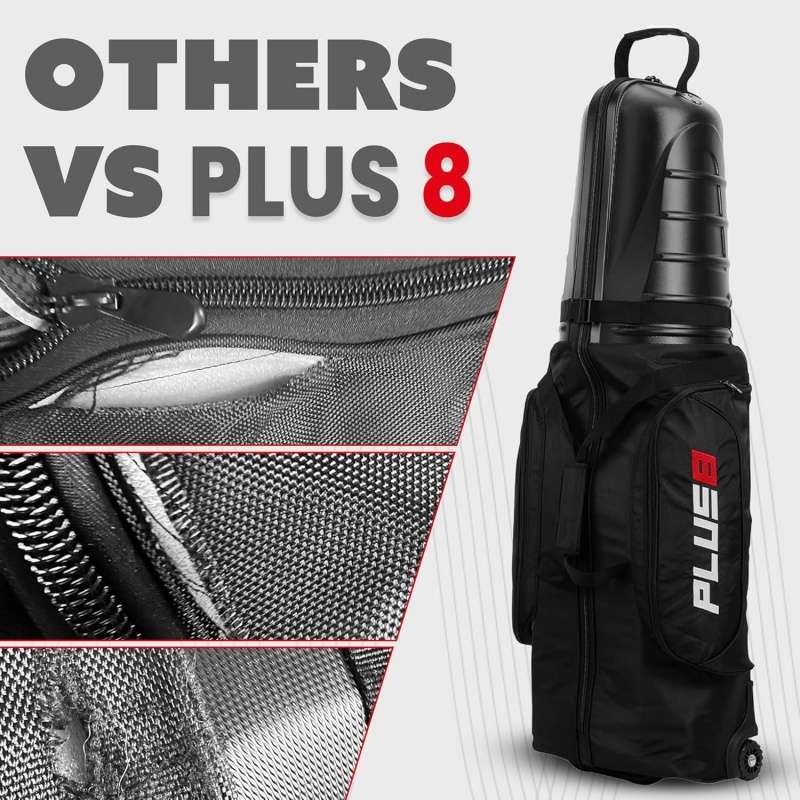
This “divergence” in the golf bag market is not fragmentation but a sign of maturity. Manufacturers are listening more closely than ever, delivering focused and extreme solutions for real, segmented user needs.
This is no longer a debate about “which is better,” but a clear-eyed understanding of what matters most to you.
Do you cherish the weightless freedom of strolling fairways in harmony with nature? Or do you value absolute peace of mind on journeys to legendary courses across the globe?
Both paths lead to better golf experiences. Understanding lightweight minimalism and armored protection is not about chasing trends but about illuminating your own priorities.
Ultimately, wisdom lies not in buying the most expensive or the newest product, but in choosing the partner that understands you best and supports your unique golf story.
Your journey is yours to define. And your golf bag should be its most reliable ally.
Explore the golf bag that truly fits your game and your journey.