
Imagine this scenario: Hole 14, Par 5, and you face a crucial second shot. You quickly assess the distance and wind, feeling that the fairway wood is the best choice.
You walk to your golf bag, reach into the main compartment… and start fumbling. Your fingers brush against the shafts of irons, encounter an old energy bar wrapper, and snag a tangled towel. Seconds tick by, and a trace of irritation creeps in. Finally, you find the fairway wood, but the smooth rhythm of your thought has already been interrupted. That tiny spark of anxiety—“Where’s my club?”—has quietly ignited.
If you’ve experienced this “golf bag treasure hunt,” you’ve felt more than a momentary inconvenience. You’re experiencing what psychologists call “decision fatigue” and “attention residue.” Every unnecessary search, every visual distraction, quietly steals your precious mental energy—energy that should be spent reading the green, controlling your breath, and enjoying the game.
Today, we’re not talking about swing techniques. We’re talking about how organizing your golf bag can create a calm, efficient environment for your brain. This isn’t just about tidiness—it’s about enhancing your performance.
Tip 1: Create Dedicated Zones to Build “Muscle Memory”

Our brains love automation. From tying shoes to driving, once an action becomes muscle memory, we save significant cognitive resources. Your golf bag organization should follow the same principle.
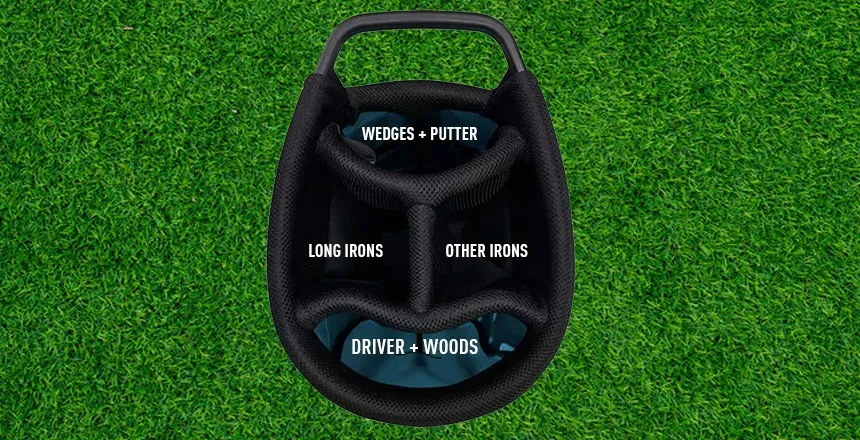
Assign a fixed “home” for each type of club (driver, fairway wood, irons, wedges, and putter). That way, when you need your 52-degree wedge, your hand instinctively reaches the right spot without your eyes or brain getting involved. The psychological relief this brings is immense.
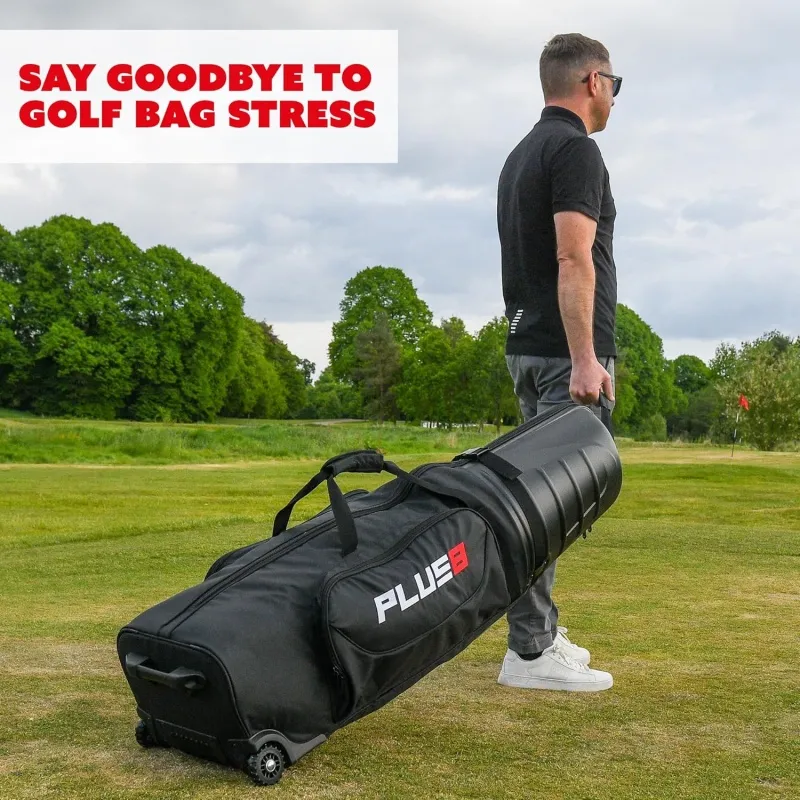
Choosing a bag designed to encourage this organization is key. For example, a golf travel bag with a top five-compartment design naturally separates irons, woods, and putters. Each compartment has a clear purpose, eliminating hesitation like “Where should this iron go?” Each time you put a club back in its spot, you reinforce a habit that soon becomes seamless.
Tip 2: Simplify Essentials and Practice “Less is More”
Barry Schwartz in The Paradox of Choice notes that too many choices cause anxiety and decision paralysis. Your golf bag may be a microcosm of “excess choice.”
Open your side pockets: Do you find three old gloves, a dozen cracked tees, five different ball markers, and half a pack of sunscreen from last summer? Every extra item silently whispers, “You might need me… maybe… who knows when.”
It’s time for a “practical audit.” After your next round, list everything you actually used: perhaps a dozen balls, six tees, one marker, one glove, one towel, a divot tool, and a rangefinder (if allowed). Everything else can go. You’ll be surprised at how little you really need.
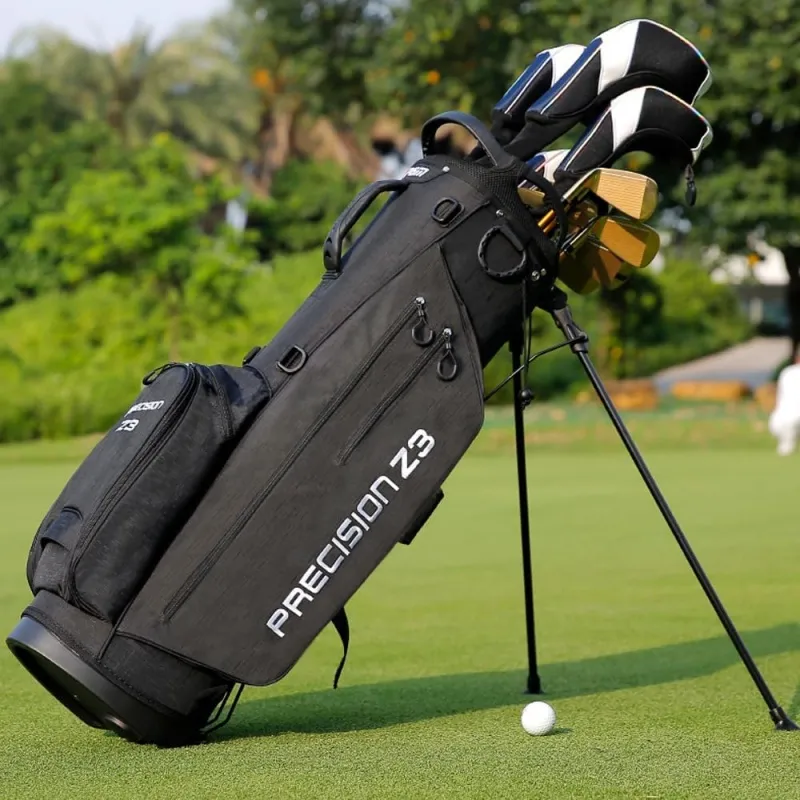
A lightweight golf bag’s compact size gently forces simplification. Fewer items mean faster searches and more mental focus on the game instead of your gear.
Tip 3: Use Pockets for “Scenario-Based Storage”
This is an advanced way to turn clutter into an intuitive system. Don’t just toss items randomly; allocate them based on “usage scenarios.”
Think of your golf bag as a mobile command center, each pocket responsible for a specific stage of the game:
- Teeing Pocket: Store new balls, tees, and markers. At the tee, your hand reaches only here.
- Course Maintenance Pocket: Keep a damp towel, brush, and green repair tools. Wherever your ball lands, cleaning and repair tools are within reach.
- Weather & Comfort Pocket: Spare gloves, lightweight raincoat, sunscreen, and insect spray—prepared for environmental changes.
- Nutrition & Rules Pocket: Energy snacks, a water bottle (if there’s a mesh pocket), and a rulebook.
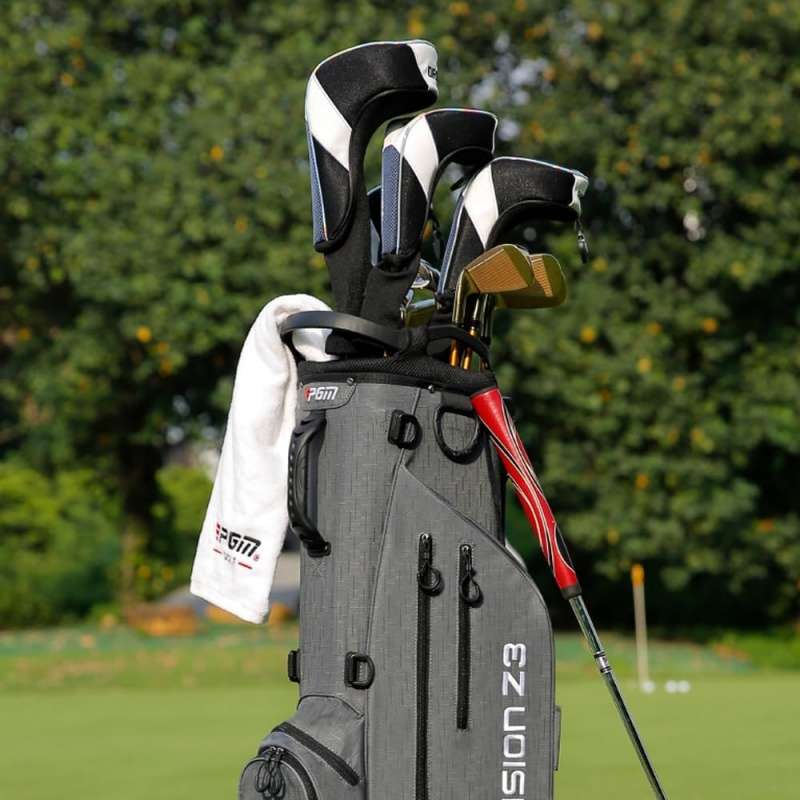
A multifunctional bag is the perfect canvas for this system. Multiple zipper pockets and even side umbrella sleeves can be assigned fixed roles. By mentally labeling each pocket, your gear management shifts from “searching” to “direct access.”
Tip 4: Pre- and Post-Round Checks to Build Rituals
Top athletes rely on pre-game rituals to get in the zone. Turning golf bag organization into a ritual creates a powerful psychological preparation effect.
Pre-Round Checklist (10 minutes)
- Refill balls, tees, and other consumables.
- Check gloves and towels for dryness.
- Ensure each club is in its dedicated zone.
- Adjust shoulder straps (if using an ergonomic walking bag).
This ritual gives you a sense of control and readiness as you step up to the first tee.
Post-Round Routine (5 minutes)
- Empty all trash and miscellaneous items.
- Remove and unfold damp towels to air dry.
- Return used balls and tees to designated pockets; place any found balls in a separate bag.
- Quickly wipe down clubheads.
This symbolizes the end of the round, clearing physical and mental clutter and leaving a perfect starting point for the next game.
Tip 5: Digital Assistance to Free Mental Space
Even the best physical organization system can’t prevent pre-game anxiety about forgetting something. Use technology as your external “hard drive.”
Create a note on your phone named “Standard Golf Bag Checklist,” dividing items into clubs, consumables, clothing, electronics, and personal items. The night before each round or trip, spend two minutes quickly checking it.
This simple action turns the lingering worry of “Did I forget something?” into a quick, actionable task. Your brain knows the checklist exists and can stop overthinking, letting you sleep more soundly.
Discover innovative golf bags designed for optimal organization and mental clarity, enhancing your game focus every round.
Common Questions During Organization
Q: Do I really need a fixed spot for every club? That sounds rigid.
A: Quite the opposite—it gives you freedom. Initially, a few rounds of conscious training are required, but soon it becomes automatic. Under pressure (like a high-stakes side spin putt), you won’t need to think, “Where’s my putter?” All attention can focus on reading the line and feeling. This cognitive ease is an invisible edge for critical moments.
Q: I feel like I might need everything. How do I effectively “declutter”?
A: Try the “three-round test.” Over the next three rounds, if an item (e.g., a 2-iron you think you “might need” or an extra spray) isn’t used once, it must leave your bag after three rounds. You’ll find that keeping gear based on actual need is far more efficient than saving items for vague “just in case” scenarios.
Make Tidiness Part of Your Game

A well-organized golf bag is more than a clean container. It’s a psychological toolbox, a physical extension of your focused, efficient game state. It reduces distractions, preserves mental energy, and injects a sense of calm control into every round.
Everything starts with choosing a bag that works seamlessly with your organization system. Whether it’s a compartment system for muscle memory or smart pocket layouts for scenario-based storage, good design quietly paves the way.
Take a moment to reassess your relationship with your golf bag. Invest a little time in organizing it and equip yourself to implement these psychological strategies. When your bag becomes orderly, your mind clears, and your game may reach unprecedented levels of composure and focus.